Category
How Much Headroom Does a Hydraulic Hangar Door Need? (The Answer: Zero)
PowerLift hydraulic hangar doors need zero headroom — the industry's lowest. Here's how that lowers building costs and maximizes your usable clear opening.

The Short Answer: Zero Inches
A PowerLift hydraulic hangar door needs 0 inches of headroom above the opening — the lowest requirement in the industry. The door is a single panel that lifts up and out on hydraulic cylinders, pivoting into an awning position rather than sliding up into the building. That means you don't have to build extra wall height above the door just to store or operate it, which directly lowers your construction cost and preserves every inch of your clear opening.
That's the headline. But if you're planning a hangar — new build or retrofit — the why behind that number is what actually saves you money and headaches. Here's what you need to know.
What "Headroom" Actually Means on a Hangar Door
Headroom is the vertical space a door needs above the opening to operate and store itself. Most large doors are hungry for it:
Bifold doors fold up and stack against the header, so they eat into the space above the opening and often require added structure.
Overhead and roll-up doors track up into the building and need clearance above (and back into) the interior.
Sliding/hydraulic canopy doors vary, but many still require framing above the clear opening.
Every inch of required headroom is wall you have to build, frame, and pay for — before you've stored a single aircraft. On a wide hangar, that adds up fast.
How PowerLift Achieves Zero Headroom
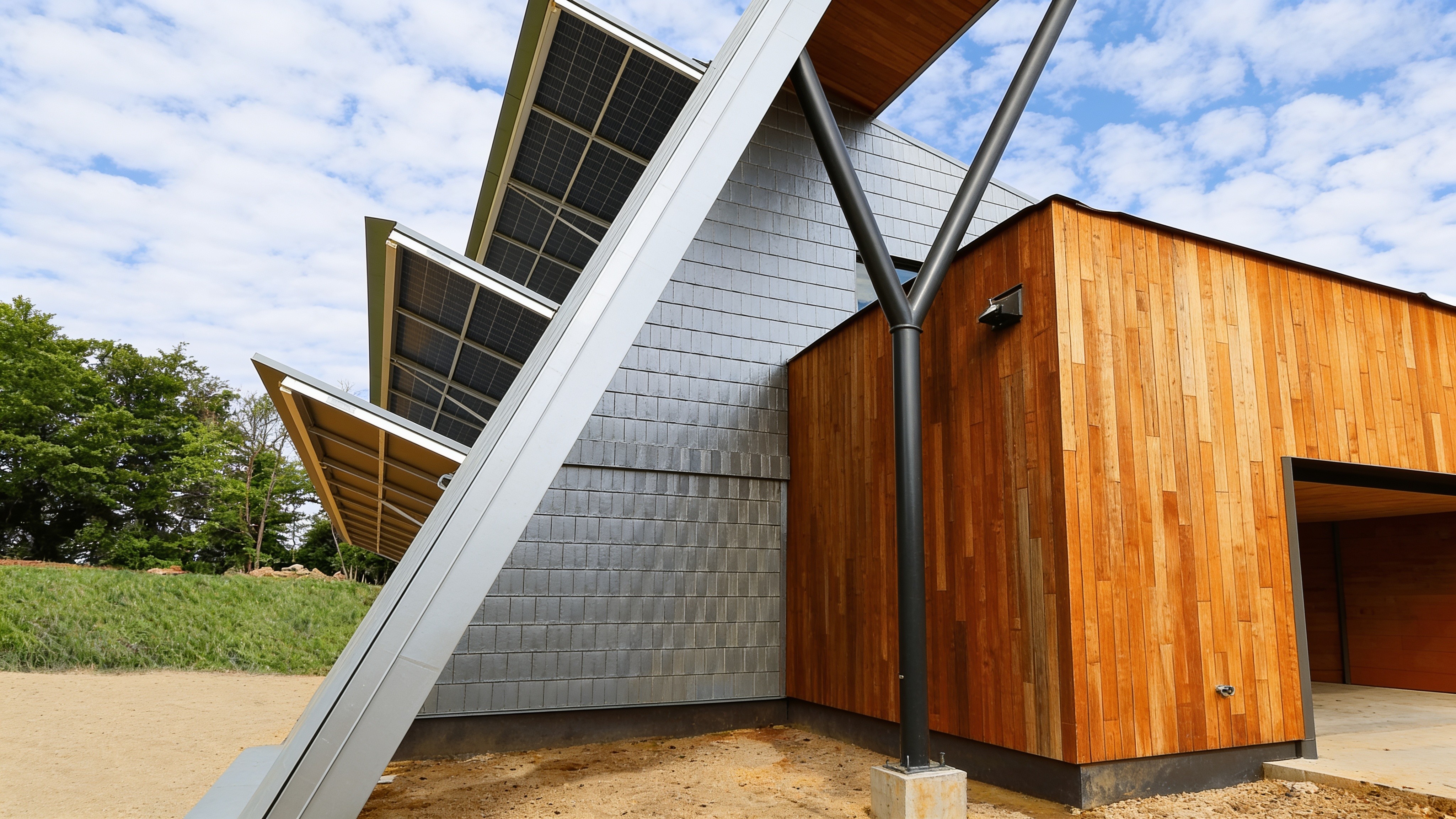
PowerLift builds the industry's only single-unit, all-welded door. Because it's one rigid panel lifted by hydraulic cylinders, it swings outward and up into a canopy instead of stacking or tracking above the opening. The header the door hangs from is the top of the opening — there's no separate storage zone to build above it.
The practical result: your wall height can stop right at the top of your door opening. On a new build, that's less steel, less wall, and lower cost. And because there are no tracks, folding leaves, or small parts crowding the opening, you get a clean, full clear span every time you open it.
Why Zero Headroom Saves You Money
On a new hangar, door choice drives building design more than most owners expect. When your door needs no headroom:
Lower walls mean less structural steel and less exterior cladding.
Simpler framing around the opening — no added header structure to carry a stacked door.
More usable interior height for the same building height, because nothing is reserved for the door to store itself.
In other words, the door isn't just a component you bolt onto a finished building — the right door lets you design a smaller, cheaper building that still fits your aircraft.
Retrofitting an Existing Hangar? The Outside Mount Adds Clearance
Here's where a lot of hangar owners are surprised. If you're replacing an old bifold, fabric, or overhead door, you might assume you're stuck with — or losing — clearance. With PowerLift's industry-exclusive outside mount, the opposite is often true: mounting the door on the exterior face of the building can actually increase your clear opening height and width compared to the door you're replacing, because the door hardware no longer intrudes into the opening.
So a retrofit isn't just a like-for-like swap. It can be an upgrade that gets a taller tail or a wider wingspan through a door that used to be too tight.
Do You Still Need to Plan for Clear Height?
Yes — headroom and clear height are two different things, and this is where planning matters. Zero headroom means you don't build extra wall above the door. But you still size the opening itself to your aircraft:
Measure your tallest aircraft's tail height, plus a safe margin for movement and any equipment.
Account for wingspan for the clear width.
Consider future aircraft, not just what's in the hangar today.
Because every PowerLift door is custom-fabricated to your exact opening — with standard sizes up to 130' wide and 30' tall, and larger for major projects with specialized engineering — the door is built around your aircraft, not the other way around. When we quote a hangar, we start with what you fly and design the opening from there.
What This Means for Your Hangar Project
If you're building or renovating a hangar in Oregon, Western Idaho, or Southern Washington, the takeaways are simple:
A PowerLift hydraulic hangar door needs zero headroom, so you can design a shorter, less expensive building without giving up clear height.
On a retrofit, the outside mount can add usable opening size versus your old door.
Size the opening to your aircraft; we handle the engineering, fabrication, delivery, and installation as one accountable local team.
That single-source model is the other half of the value: the same team that designs your door builds it, delivers it, installs it — usually in a single day — and stays close by for support long after. No subcontractors assembling a door they didn't build.
Get a Free Quote
Planning a new hangar or replacing an aging door? Tell us what you fly and we'll design a custom hydraulic door engineered to your exact opening. Get a Free Quote
Frequently Asked Questions
FAQ:
How much headroom does a hydraulic hangar door need?
Zero inches. PowerLift hydraulic doors are the industry's lowest-headroom door — the single panel lifts up and out into an awning position instead of stacking or tracking above the opening, so no extra wall height is required.
How is that different from a bifold or overhead hangar door?
Bifold doors fold up and stack against the header, and overhead/roll-up doors track up into the building — both require clearance above the opening and often added structure. A PowerLift door needs none of that.
Can a hydraulic door increase my opening when I replace an old door?
Often, yes. Our industry-exclusive outside mount places the door on the building's exterior face, which can increase your clear opening height and width compared to the bifold, fabric, or overhead door you're replacing.
What's the largest hangar door PowerLift builds?
Standard sizes reach up to 130' wide and 30' tall, and we can go larger for major projects with specialized engineering. Every door is custom-built to your opening.
How long does hangar door installation take?
Custom fabrication typically takes about six weeks, and most doors are delivered and installed in a single day by our local crew.