Category
Hydraulic Shop Doors vs. Overhead Doors: Which Is Right for Your Shop?
Choosing a big door for your shop? Here's how a hydraulic shop door compares to a traditional overhead door on clearance, maintenance, and long-term cost.
The Short Answer
For a large shop or garage opening, a hydraulic door gives you a full, unobstructed clear opening, near-zero maintenance, and a single all-welded structure — while a traditional overhead or roll-up door is cheaper up front but relies on tracks, springs, and many moving parts that wear out and eat into your opening. If you want a big door that lasts for decades and looks like a showpiece, hydraulic wins. If you need the lowest possible upfront cost on a standard-size opening, an overhead door still has a place.
Here's how they actually compare, and where each one makes sense.
Clear Opening: What You Can Actually Drive Through
This is the biggest practical difference. An overhead door's tracks and rollers frame the opening and consume space; the drum and springs also need room above and behind the opening.
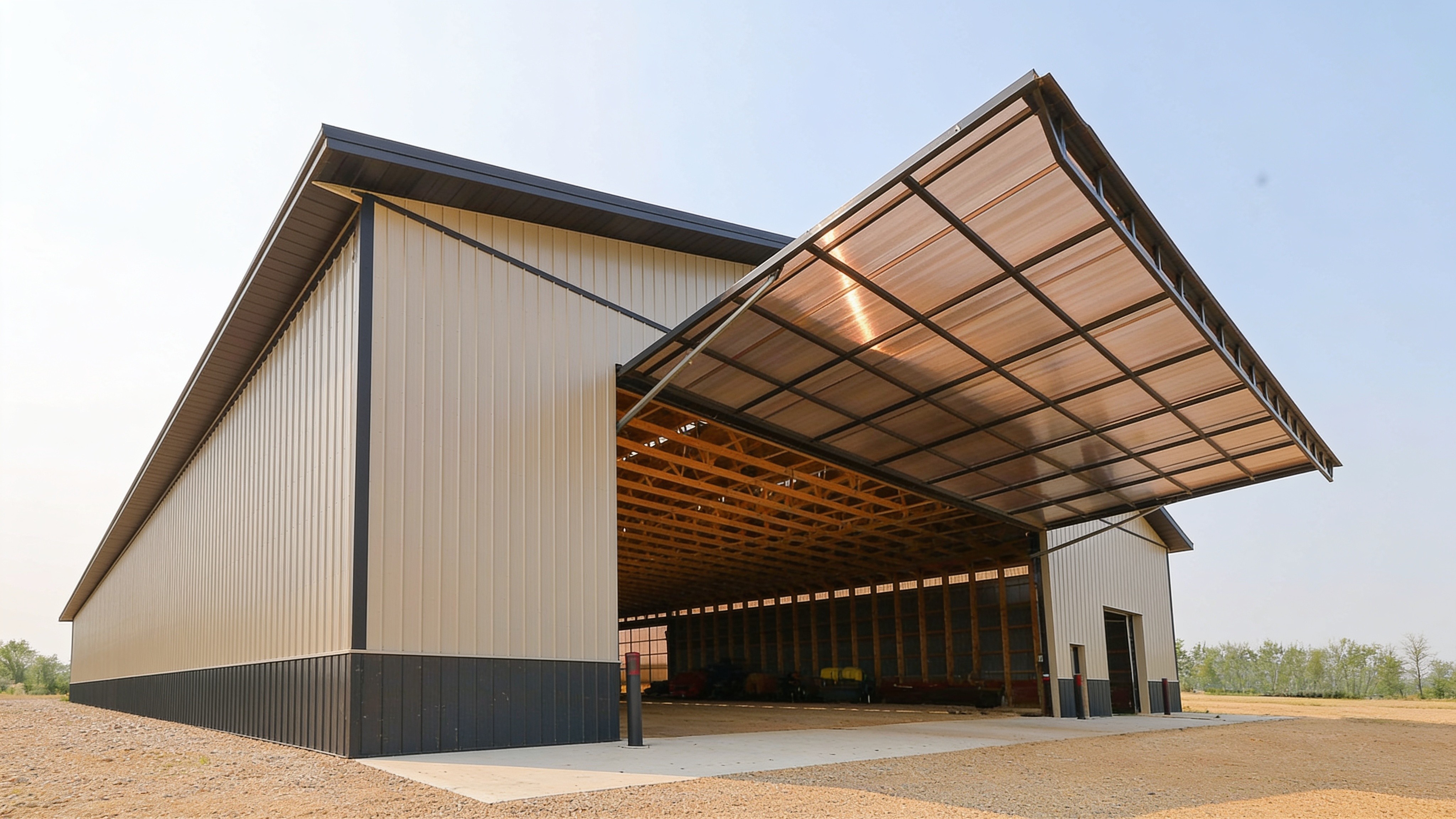
A hydraulic door is one solid panel that lifts up and out — no tracks in the way, no floor track to trip a trailer jack, and the industry's lowest 0" headroom requirement. When it's open, you get the full width and height with nothing intruding. For shops moving RVs, boats, lifted trucks, or equipment, that unobstructed span is often the deciding factor.
Maintenance: Where the Real Cost Shows Up
Overhead doors have a lot to go wrong over time — springs, cables, rollers, tracks, and panels that dent and rack. In a working shop that cycles a door daily, that's ongoing service and downtime.
A PowerLift hydraulic door is built as a single, all-welded unit with no bolts or screws to fatigue and loosen. The hinges are welded through the header tube and ride on permanently lubricated PTFE bronze bushings — no greasing, silent operation, and a life expectancy measured in decades. Most doors need zero maintenance. That difference compounds every year you own it.
Durability and Weather
A shop door has to seal out Northwest weather and take daily abuse. Overhead door panels flex and can lose their seal as they age. A hydraulic door's rigid steel frame holds its shape, and PowerLift's weather seal is the best in the business — so you keep heat in and wind, rain, and dust out, year after year.
Looks and Custom Finish
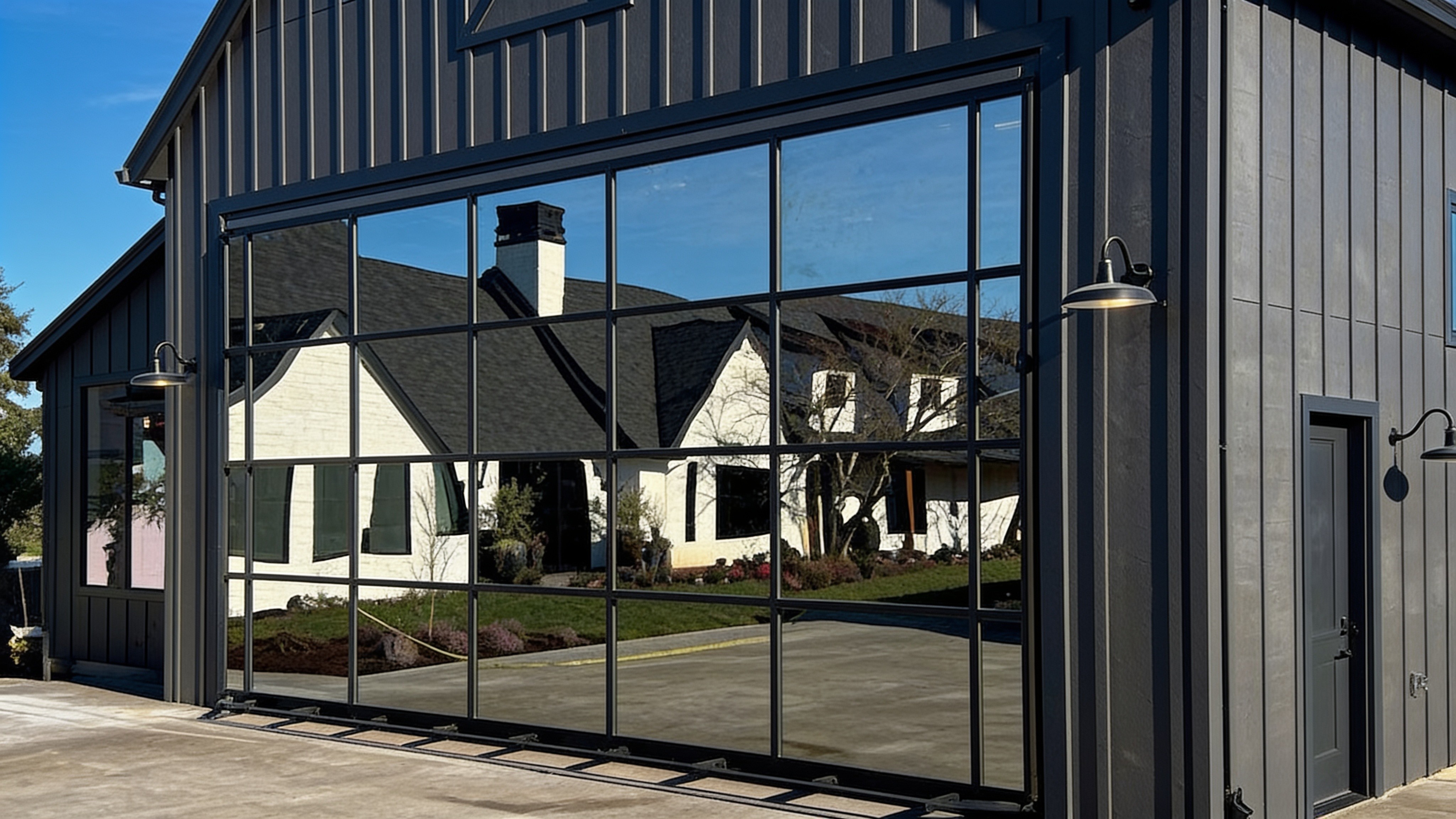
If your shop is also a statement — a car barn, a hobby shop, a showpiece garage — this matters. Overhead doors come in limited looks. A hydraulic door can be clad in glass, wood, steel, or virtually any material to match your building, with windows and finishes built to your design. It's the difference between a utilitarian door and an architectural feature.
Cost: Upfront vs. Lifetime
Overhead doors usually win on upfront price, especially at standard residential sizes. A custom hydraulic door is a premium product — you're paying for all-welded steel, custom fabrication to your exact opening, and single-source design/build/install.
But over the life of the door, the math shifts: near-zero maintenance, no spring/cable/track replacements, and a structure built to outlast the building often make the hydraulic door the better long-term value — particularly on large openings where overhead doors struggle and require heavy-duty (and pricier) hardware anyway.
Quick Comparison
Hydraulic Shop Door | Overhead / Roll-Up Door | |
|---|---|---|
Clear opening | Full, unobstructed (0" headroom) | Reduced by tracks/framing |
Moving parts | Minimal, all-welded | Springs, cables, rollers, tracks |
Maintenance | Near-zero on most doors | Ongoing (springs, cables, panels) |
Weather seal | Best-in-class | Degrades as panels age |
Custom finish | Glass, wood, steel, and more | Limited |
Upfront cost | Premium | Lower |
Lifespan | Decades | Shorter, more service |
So Which Should You Choose?
Choose a hydraulic shop door if you have a large opening, want a full clear span, plan to keep the building for the long haul, or want the door to be a showpiece.
An overhead door can still make sense for a small, budget-driven, standard-size opening where upfront cost is the priority.
For most working shops, car barns, and equipment buildings in Oregon and the Northwest, the hydraulic door's clear opening and near-zero maintenance are what tip the decision.
Get a Free Quote
Not sure which fits your shop? Tell us your opening size and how you'll use it, and we'll design a custom hydraulic door built to your exact space. Get a Free Quote or call (971) 359-3883.
Frequently Asked Questions
Are hydraulic shop doors better than overhead doors?
For large openings and long-term ownership, generally yes — a hydraulic door gives a full clear opening, near-zero maintenance, and an all-welded structure. Overhead doors win mainly on upfront cost at standard sizes.
How wide can a hydraulic shop door be?
Standard PowerLift doors go up to 130' wide and 30' tall, with larger sizes available through specialized engineering. Every door is custom-built to your opening.
Do hydraulic shop doors require much maintenance?
Most need zero. The all-welded frame has no bolts or screws to loosen, and the grease-free PTFE bronze hinge bushings mean no routine servicing.
Can a hydraulic door be glass or wood?
Yes — it can be clad in glass, wood, steel, or virtually any material, with custom windows and finishes, making it ideal for a showpiece shop or car barn.
Is a hydraulic door worth the higher upfront cost?
Over the life of the door, the near-zero maintenance and decades-long durability often make it the better value, especially on large openings where overhead hardware is expensive and wears faster.